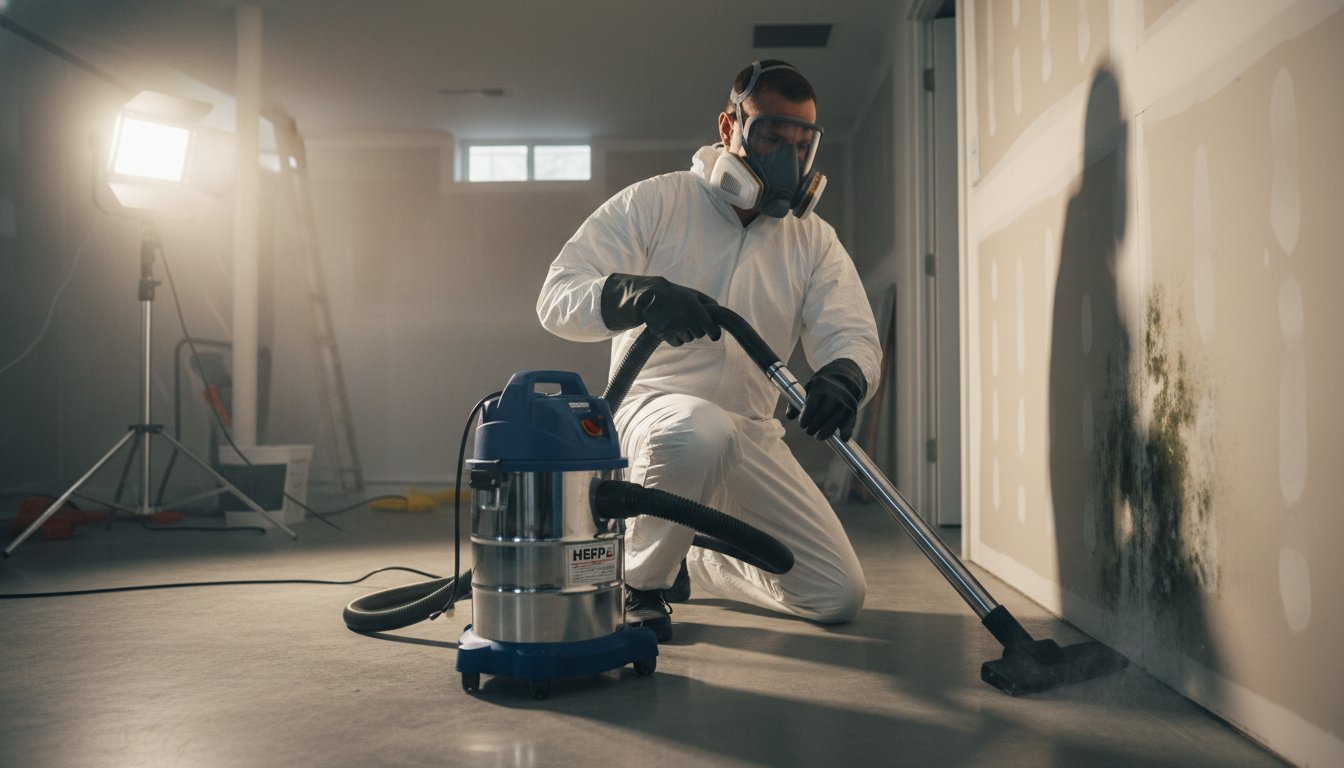
When you spot a patch of mold in your basement, your first instinct might be to grab the household vacuum. It seems like a quick fix, but this common mistake can turn a small problem into a whole-home nightmare. Standard vacuums aren’t equipped to capture microscopic mold spores; instead, they often blast these hazardous particles throughout the air, worsening your air quality and spreading the contamination. This is precisely why professionals never tackle a job without the correct tool: a true hepa vacuum for mold removal with a sealed system.
But what does “HEPA” even mean, and how can you be sure you’re using the right equipment to protect your family? In this guide, we’ll cut through the confusion and give you the peace of mind you deserve. You will learn the critical difference between vacuum types, understand the serious risks of improper cleanup, and gain the confidence to know when to handle a small spot yourself versus when it’s time to call in a trusted expert to safeguard your home’s health and value.
What is a HEPA Vacuum and Why is it Essential for Mold?
When you discover mold in your basement or home, your first instinct might be to grab your household vacuum. Stop. Using a standard vacuum is one of the most dangerous mistakes you can make during cleanup. Think of mold spores as microscopic seeds; a regular vacuum will suck them up from one surface only to blast them out through its exhaust, spreading the contamination throughout your home’s air. To truly safeguard your property and family, you need a professional-grade tool. This is where a hepa vacuum for mold removal becomes absolutely critical. HEPA stands for High-Efficiency Particulate Air, and it represents a completely different level of filtration and safety.
Understanding the HEPA Filtration Standard
The HEPA standard isn’t just a marketing term; it’s a rigorous government efficiency benchmark. To earn the name, a true HEPA filter must be proven to capture at least 99.97% of all airborne particles down to 0.3 microns in size. To put that in perspective, the smallest mold spores are around 3 microns. This means a HEPA filter is more than equipped to trap not only dangerous mold spores but also other threats to your home’s air quality, including dust mites, pollen, and bacteria, creating a healthier living environment.
How HEPA Vacuums Trap Microscopic Spores
Unlike a simple screen or sieve, a HEPA filter is made of an incredibly dense, tangled web of fiberglass fibers. As contaminated air is forced through this maze, particles are physically captured and removed from circulation. They either directly impact a fiber, get snagged by one, or are bounced around by air molecules until they stick. The result is that microscopic threats are permanently trapped, ensuring the air expelled from the vacuum is significantly cleaner than the air that went in. This is essential for protecting your home from cross-contamination.
Key Difference: A Sealed System vs. Just a HEPA Filter
This is the crucial detail that separates a professional remediation tool from a standard appliance. Many consumer vacuums now claim to have HEPA filters, but they lack a completely sealed system. A true hepa vacuum for mold removal is built with airtight gaskets and seals at every connection point, from the hose to the motor housing. This design prevents contaminated air from leaking around the filter and escaping back into your room. Without a sealed system, a vacuum gives you a false sense of security while actively jeopardizing your home’s air quality-the very problem you’re trying to solve.
The Dangers: Why Using a Regular Vacuum on Mold is a Nightmare Scenario
When homeowners discover a patch of mold, the first instinct is often to grab the household vacuum. This is one of the most dangerous mistakes you can make. A standard vacuum, even one with a good filter, is not designed to handle microscopic mold spores. Instead of removing the threat, it becomes a high-powered spore blower, turning a contained problem into a full-blown contamination event that jeopardizes your entire home and family.
Aerosolization: Turning a Small Problem into a House-Wide Issue
Your vacuum’s powerful exhaust port will take dormant mold spores and launch them into the air, a process called aerosolization. These invisible particles, now airborne, can travel effortlessly throughout your home. They can easily enter your HVAC system, circulating from the basement to the bedrooms and contaminating previously clean areas. This widespread contamination is why professional mold remediation techniques involve strict containment protocols, making the cleanup process far more complex and costly than the original issue.
Why ‘HEPA-Type’ and Shop-Vacs Aren’t Safe
Don’t be fooled by misleading labels. A “HEPA-type” or “HEPA-style” filter is not the same as a true HEPA filter. These filters lack the stringent efficiency standards to capture microscopic mold spores. Similarly, a typical shop-vac is a nightmare for mold cleanup. These units are not sealed systems; air and spores leak around the filter, out of the hose connections, and through the canister itself. Using one on mold is like pointing a leaf blower of concentrated contaminants directly into your living space, underscoring why a certified, sealed hepa vacuum for mold removal is the only safe option.
Health Implications of Airborne Mold Spores
Once mold spores are aerosolized, they can be inhaled by your family, leading to a host of serious health issues. Protecting your home’s air quality is paramount, as exposure can trigger or worsen:
- Allergic reactions (sneezing, runny nose, red eyes, skin rash)
- Asthma attacks in individuals with asthma
- Chronic coughing, wheezing, and other respiratory problems
- More severe reactions in infants, the elderly, and those with compromised immune systems
Safeguarding your family from these invisible threats is the most important reason to handle mold correctly from the very beginning.
Key Features of a Professional Mold Remediation HEPA Vacuum
Understanding why a HEPA vacuum is necessary is the first step. Now, let’s focus on what separates a consumer-grade machine from the professional equipment required to truly safeguard your home. When dealing with a toxic threat like mold, the details of your equipment aren’t just features-they are critical lines of defense for your family’s health. A true professional-grade hepa vacuum for mold removal is built with containment as its primary function.
A Fully Sealed Canister and Housing
The most significant danger of using the wrong vacuum is accidentally making the problem worse. If the vacuum’s body has leaks at its seams, joints, or around the filter housing, it will suck in mold spores and blast them right back out into the air before they ever reach the filter. Professional models prevent this nightmare scenario with heavy-duty gaskets and clamps that create a completely airtight, sealed system. This ensures that 100% of the air entering the vacuum is forced through the HEPA filter, trapping the dangerous particles securely inside.
Smooth, Non-Porous Hoses and Attachments
Take a look at a standard household vacuum hose. Its corrugated, ribbed design is a perfect breeding ground for trapped mold spores. Using a hose like this creates a serious risk of cross-contamination, where you unknowingly carry spores from the contaminated area to a clean part of your home. Professional remediation equipment uses smooth-bore, non-porous hoses and attachments that can be easily cleaned and decontaminated after use. Specialized tools like crevice nozzles and soft-bristle brushes are also essential for dislodging and capturing spores from tight corners, baseboards, and textured surfaces.
Sufficient Power and Airflow (CFM)
Effective mold removal requires more than just surface-level cleaning. Airflow, measured in Cubic Feet per Minute (CFM), is the muscle behind the machine. A high CFM rating provides the powerful suction needed to pull microscopic mold spores from deep within porous materials like drywall, wood framing, and carpeting. This level of thoroughness is a key principle in the official EPA guidelines on mold remediation, which emphasize capturing all settled dust and spores. However, this power must be controlled to avoid damaging the surfaces being cleaned-a balance that professionals are trained to manage.
These features are non-negotiable for a safe and effective cleanup. At Delaware Valley Basements, we invest in top-quality, professional-grade equipment because protecting your home is our first priority. If you suspect you have a mold problem, don’t risk your health with inadequate tools. Contact your trusted local partner for a comprehensive inspection and solution.

How Professionals Use HEPA Vacuums in the Remediation Process
While a powerful tool, a HEPA vacuum is just one piece of a comprehensive mold remediation strategy. For professionals, it’s not about simply vacuuming up visible mold; it’s about systematically controlling and eliminating microscopic spores at every stage of the process to safeguard your home and family. This meticulous approach is what ensures the problem is solved correctly and permanently, providing true peace of mind.
Initial Cleanup and Dust Control
Before any contaminated materials are removed, technicians establish a containment zone. The first use of a hepa vacuum for mold removal is often to clean the containment barriers themselves and the surrounding areas. This crucial first step captures loose spores and dust, preventing them from becoming airborne and spreading when demolition begins. It’s a proactive measure that keeps the contamination locked down from the very start.
Post-Removal Detail Cleaning
Once all mold-damaged materials like drywall or insulation are carefully removed and bagged, the most intensive vacuuming begins. Technicians meticulously clean every exposed surface within the containment area. This isn’t a quick pass; it’s a detailed cleaning of:
- Wall studs and framing
- Subflooring and concrete slabs
- Ceiling joists and structural beams
- All pipes, wiring, and fixtures
This step is designed to capture the invisible, residual spores left behind, ensuring the underlying structure of your home is truly clean before any rebuilding can occur.
Final Air Scrubbing and Purification
After all surfaces have been cleaned and treated, the air itself must be purified. Many professional HEPA units can be converted into air scrubbers, running continuously for hours or even days. This final, critical step captures any lingering airborne spores that may have been disturbed during the process. It’s the last quality control measure performed before containment is taken down, guaranteeing the air in your home is safe and healthy to breathe again.
This multi-stage, professional process highlights the difference between a quick fix and a permanent solution. Worried about mold in your home? Don’t leave your family’s health to chance. Schedule a free, professional inspection today.
Secure Your Home’s Health: The Professional Approach to Mold Removal
As we’ve seen, tackling a mold problem is not a job for a standard household vacuum. Attempting to clean mold with one can turn a contained issue into a full-blown nightmare, spreading invisible, harmful spores throughout your home’s air. The critical difference lies in professional-grade containment. A true hepa vacuum for mold removal is the only tool specifically engineered to capture 99.97% of these microscopic particles, ensuring the air you breathe remains clean and safe during and after the remediation process.
While the right equipment is crucial, it’s the expertise behind it that guarantees lasting peace of mind. For over 25 years, Delaware Valley Basements has been the trusted, local, and family-owned partner for homeowners facing this very challenge. Our commitment to excellence is backed by comprehensive solutions, including waterproofing systems that come with a Lifetime Transferable Warranty. We don’t just remove mold; we safeguard your home’s long-term health.
Don’t risk your family’s health. Get a Free Mold Inspection & Estimate from our experts. Let our family help protect yours and restore the healthy, safe living environment you deserve.
Frequently Asked Questions About HEPA Vacuums and Mold
Can I just put a HEPA filter in my Shop-Vac for mold removal?
Attempting this poses a serious risk to your home and health. A standard Shop-Vac is not airtight, meaning even with a HEPA filter, microscopic mold spores can escape through the exhaust and cracks in the casing. This can spread the contamination, turning a contained issue into a widespread nightmare. To truly safeguard your living environment, you must use a vacuum cleaner specifically designed and sealed for hazardous dust containment, not just a standard vacuum with an upgraded filter.
Is it possible to rent a professional-grade HEPA vacuum?
Yes, renting professional-grade equipment is a practical option for a one-time project. Many tool rental centers and large home improvement stores offer them. Be specific and ask for a sealed, commercial HEPA vacuum designed for hazardous materials, not just a high-filtration shop vacuum. It is crucial to confirm that the unit has been thoroughly decontaminated after its last use to prevent introducing new contaminants into your home and to ensure your family’s safety.
What should I do with the vacuum bag or canister after cleaning up mold?
Proper disposal is critical to prevent re-contamination. The vacuum bag or the contents of the canister should be carefully sealed inside a heavy-duty, 6-mil plastic disposal bag before you leave the work area. Seal the bag tightly with tape. For added security, we recommend double-bagging the waste. This sealed bag should then be taken directly to an outdoor trash receptacle for immediate disposal, protecting your home from any lingering threat.
How do I know if a vacuum cleaner is truly HEPA certified?
Don’t be misled by clever marketing terms like “HEPA-like” or “HEPA-type.” A true HEPA vacuum will be clearly labeled as capturing “99.97% of particles as small as 0.3 microns.” Look for specifications that mention a sealed system or airtight construction. This ensures that contaminated air doesn’t leak out before passing through the filter. This level of certification is paramount when you need a hepa vacuum for mold removal to protect your home’s air quality.
Can a HEPA vacuum remove the musty smell of mold?
A HEPA vacuum addresses the source of the problem-the physical mold spores-but not the lingering odor itself. That musty smell is caused by gases (MVOCs) released by active mold. By removing the spores, you stop the source of the smell. Once the mold is gone and the underlying moisture issue is fixed, the odor will dissipate over time. For persistent smells, professional-grade air scrubbers may be necessary to fully restore your home’s air quality.
After HEPA vacuuming, is the mold problem completely solved?
No, HEPA vacuuming is a crucial cleanup step, but it is not the complete solution. The single most important action is to identify and eliminate the source of moisture that allowed the mold to grow in the first place. Without fixing the underlying leak, humidity, or water intrusion issue, the mold will inevitably return. A proper hepa vacuum for mold removal is part of a larger process that protects your home, but the root cause must be permanently solved.
Leave a Reply